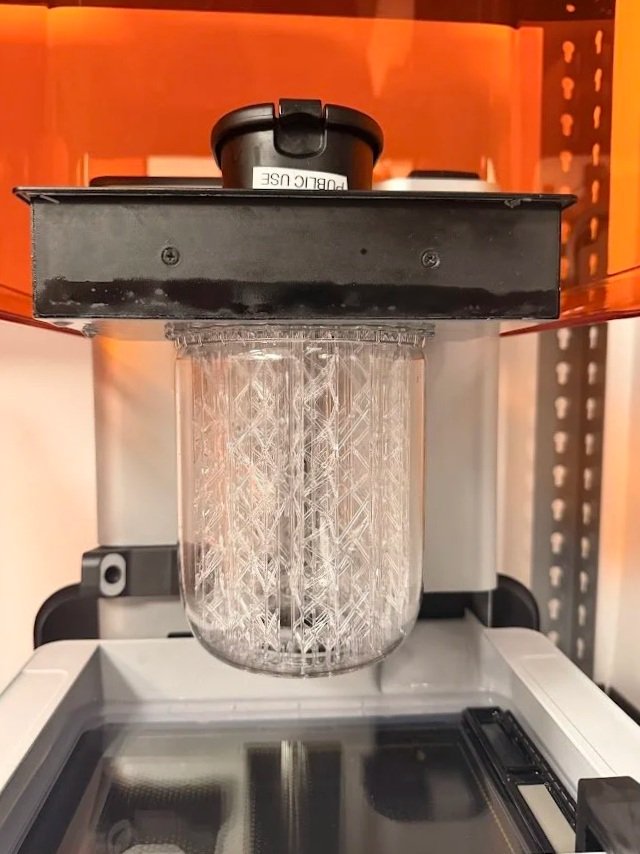
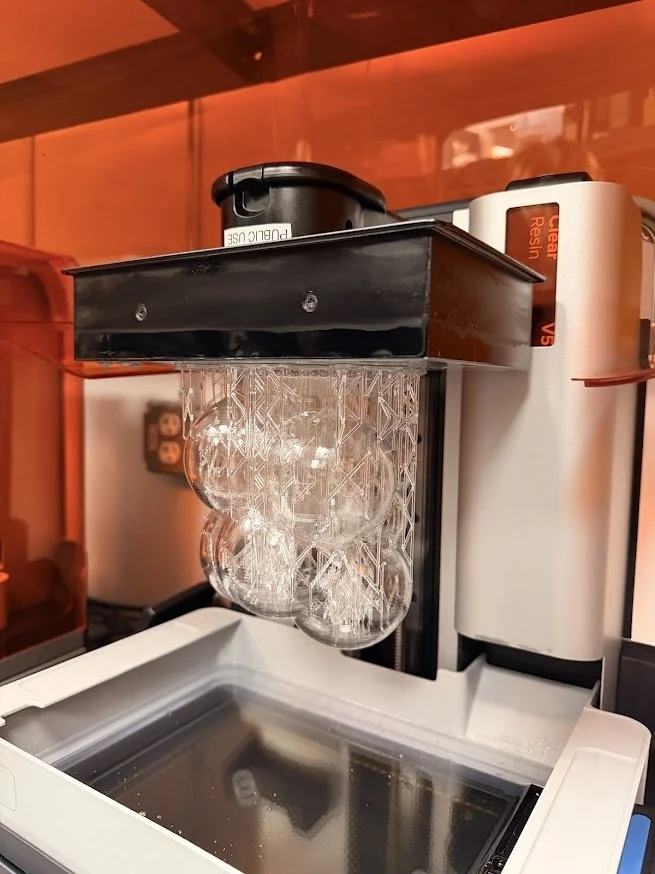
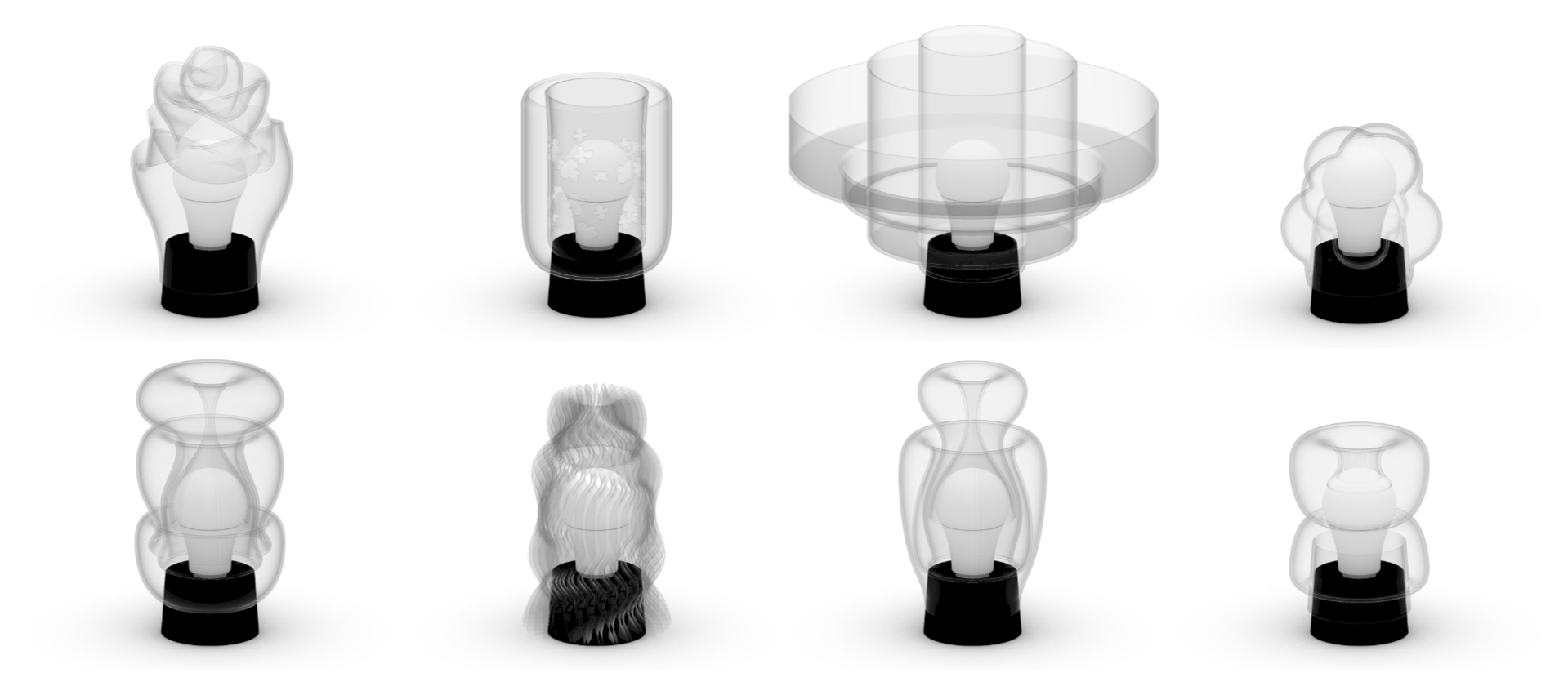
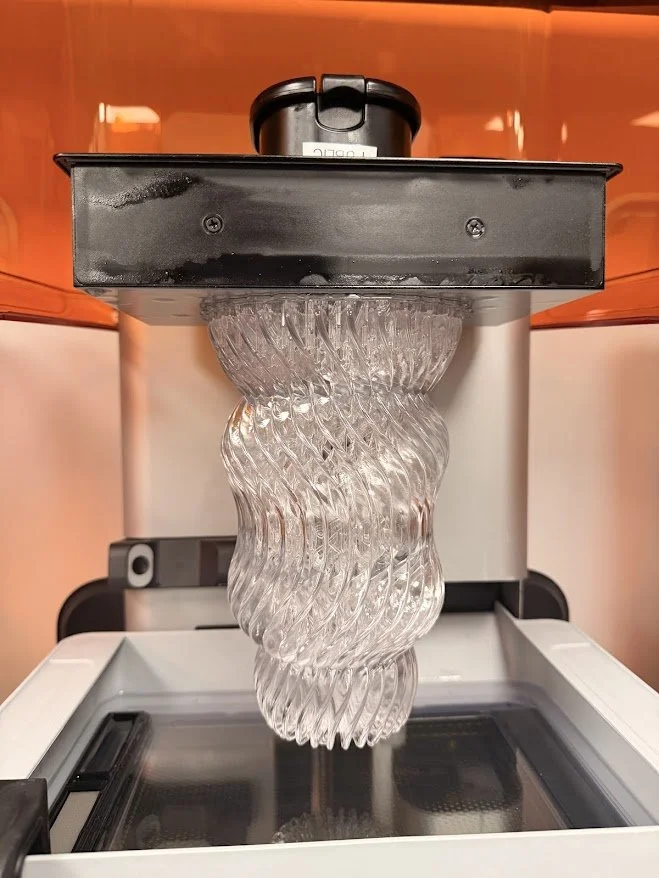
For the 2026 Formlabs Hackathon, I designed modular lamps as part of a team of three. The lamps have a custom lead-weighted base, that fit an E26 bulb, and universally interface with all eight of the forms pictured to the right.
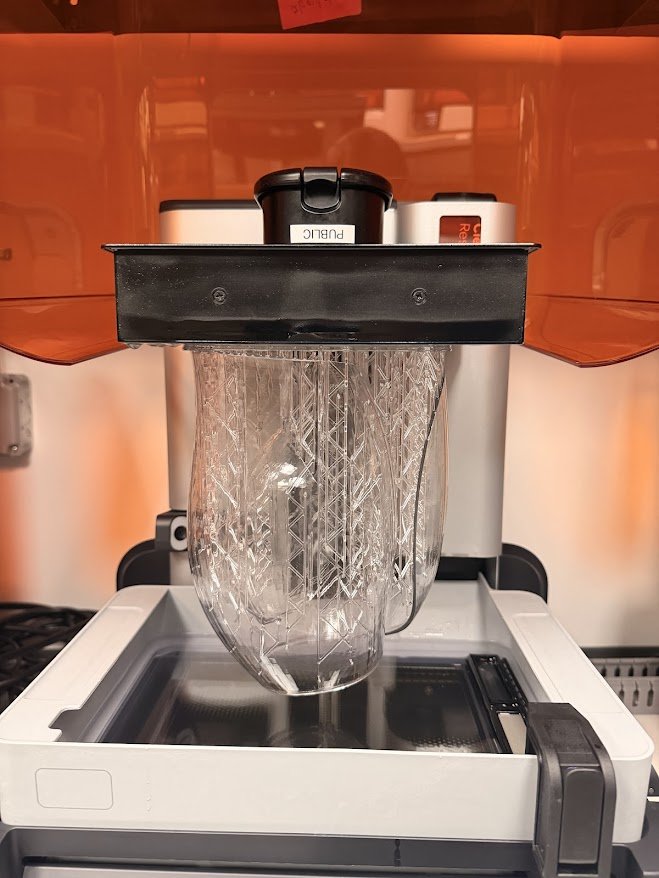
I wrote a Grasshopper script that allowed me to parametrically generate inspiration for my final CADs. The lamps were printed on a Form 4 (and thus were limited via the volume of the printer). I wanted to work with colored resin, but in order to avoid waste and dye contamination, I tried dying my clear print using alcohol inks and an IPA bath (with some success).
Lessons Learned:
Avoiding printing tolerance with a draft angle
Navigating between multiple CAD softwares (Blender, Rhino, OnShape, Fusion) can be difficult - optimal progression is often from least constrained to most, doing final interfacing steps in a program such as Rhino that has the ability to handle diverse file types.
Resin printing finishing techniques
Alcohol ink dye baths - require long time periods and is materially intensive. Better off dying resin if possible.
Sanding - have to sand to a very very fine grit to avoid it looking like scratches. Must be followed by a resin dip or an acrylic clear coat.
3d file resolution for printing - some of our prints showed the subdivisions of a surface as little squares. It’s important to remember that
Intelligent use of supports - don’t trust the slicer! One of my lamp forms was rendered essentially useless because I had unnecessary supports inside that were very difficult to remove (and led to internal scratches).
Next Steps:
I want to try some other finishing techniques - maybe painting with an airbrush?
I think there is a lot that can be done with intentional light path modeling. There are ways to SLA print lenses, and use them to concentrate, scatter, or refract light. Particularly inspired by works such as Boris Acket’s Volumetric Colour Studies, maybe something similar could be achieved through multimedia work and the addition of glass.
On the material side, it would be interesting to play with shadows and resin thickness.
I also have to tweak the base design before doing final documentation. I made my prints so they covered the PLA base entirely, but I think I would prefer the shades to sit on top. So new CADs + prints with lead shot need to be made!
I also have to finish soldering some of the electronics to wire the bulbs to the switches.